
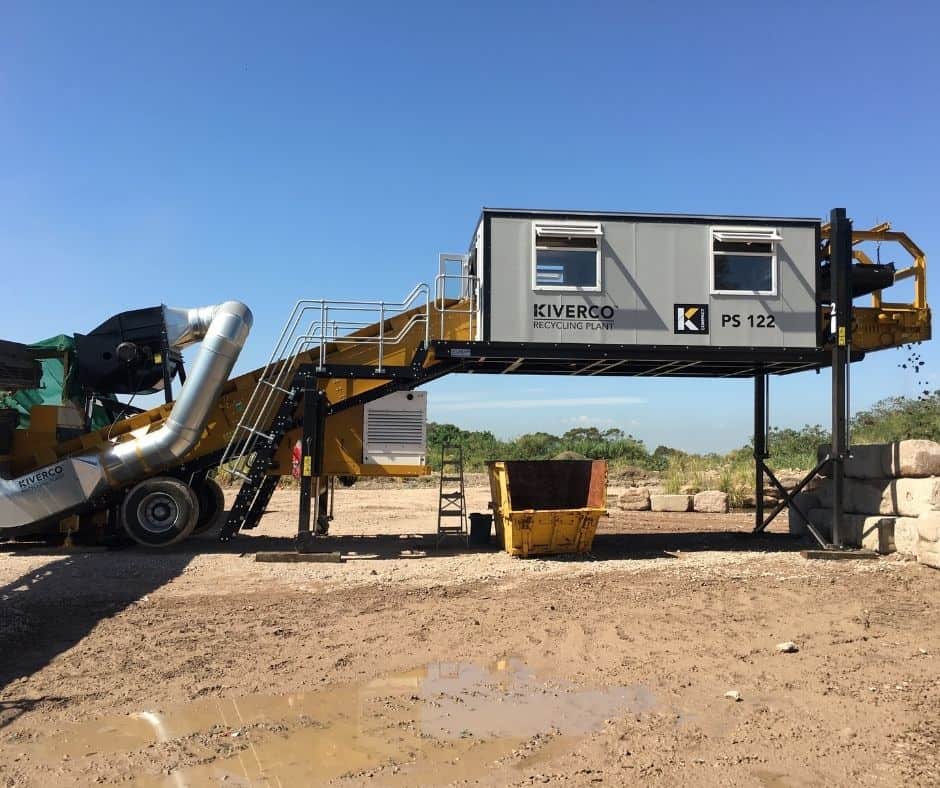
The Kiverco PS122 picking station has been developed as a flexible and mobile solution for modern waste sorting and recycling operations. It offers a practical response to the growing demand for high-quality material recovery across a range of waste streams. Designed as a two-bay mobile unit, the PS122 is built to deliver efficient separation without the need for permanent infrastructure, making it suited to operators who require rapid deployment and adaptable processing capability.
At the heart of the PS122 is the integration of several separation technologies within a single compact system. Ferrous metal recovery is handled by an overband magnet mounted externally to the picking cabin, allowing steel and other magnetic metals to be removed automatically from the material flow before it reaches the manual picking zone. This reduces the manual burden on operatives while improving both safety and the purity of recovered metal.
Light fraction separation is achieved through a built-in air separation system located at the feed-in point. Using a blower and adjustable air knife, the windshifter lifts lighter materials such as paper and plastics away from heavier fractions. This early-stage separation improves downstream material quality and helps stabilise throughput across varying waste types. The combination of mechanical and air-based separation allows the PS122 to tackle highly mixed input materials with consistency.
The enclosed picking cabin forms the core of the manual sorting process. The station is insulated and weatherproof, with low energy lighting and emergency stop systems running the length of the conveyor. The working environment is designed to protect operators from the physical and biological hazards traditionally associated with waste sorting. Optional heating and cooling systems allow the unit to remain productive in extreme weather, while integrated dust control reduces airborne particulate exposure. Conveyor speed is controlled directly by operators, enabling throughput to be adjusted in real time to match material composition and staffing levels.
Mobility is one of the defining advantages of the PS122. The unit is built on a single-axle wheeled chassis. Hydraulic jack legs provide stabilisation and height adjustment once in position, while a wheeled site axle supports transport within yards and facilities. The diesel electric power system allows the station to operate independently of fixed electrical supplies, which removes a barrier to deployment in remote or temporary locations. Arrival on site to operational readiness can be achieved in under an hour, enabling true plug-and-process functionality.
In the Australian context, the PS122 offers a direct response to several challenges faced by the waste and recycling sector. Contamination remains an obstacle to producing saleable recycled materials, while confusion over recycling rules and the persistence of wish-cycling continue to degrade feedstock quality. By combining magnetic separation, air classification and controlled manual picking, the PS122 allows operators to remove contaminants at the earliest possible stage, protecting downstream processing equipment and improving the market value of recovered materials.
Construction and demolition waste is another area where the PS122 works well. The increasing volumes generated by infrastructure growth need flexible systems capable of separating timber, metal, clean stone and concrete from contaminated hardcore. The picking station provides the level of control needed to isolate high-value fractions while dealing effectively with mixed and variable inputs.
The system also supports broader landfill diversion and circular economy objectives by enabling higher recovery rates from materials that might otherwise be discarded. By improving material purity and reducing reliance on landfill, operators can build more resilient recycling operations while responding to tightening regulatory and community expectations.
For skip hire companies and waste processors seeking scalable and cost-efficient solutions, the PS122 offers a balance of performance, mobility and operational independence. The absence of permanent infrastructure requirements keeps capital expenditure low and allows a recycling operation to be established quickly, with minimal lead time from delivery to production. This enables businesses to increase sorting capacity as needed, supporting immediate operational demands while providing flexibility for long-term growth. The Kiverco range is sold exclusively by Lincom Group and is supported by a national after-sales service and support network. From commissioning and operator training through to parts availability and ongoing technical assistance, Lincom provides the backing required to keep equipment operating reliably in demanding conditions. This local support ensures that operators not only benefit from Kiverco’s proven design, but also from long-term service capability and peace of mind once the machine is in the field.
This feature appeared in the February issue of Inside Waste News.